
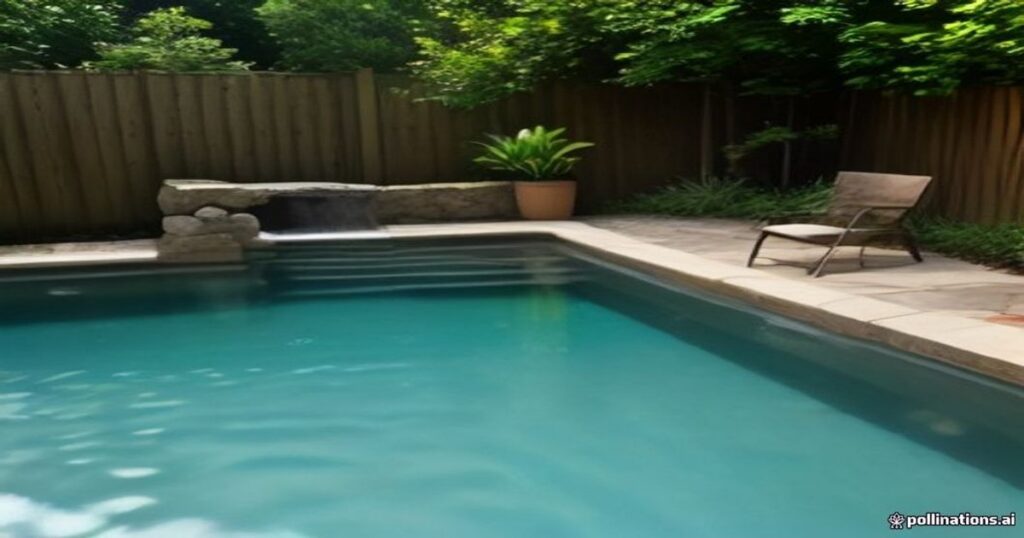
How to Compare Pool Stone for Barefoot Comfort in Full Sun
Compare pool stone for barefoot comfort with two separate evidence tracks: documented, finish-specific performance information and a controlled site observation that never requires anyone to step on loose, wet, or potentially hot samples. Subjective touch and appearance observations can help rank candidates, but they are not thermal or slip-performance tests. The pool designer, installer, and other qualified professionals must approve the full deck and coping assembly.
What “comfortable” needs to mean on this project
Barefoot comfort can include surface temperature, texture against skin, sharpness at edges, stability, glare, and confidence when moving from water to deck. These are related but not interchangeable. A cooler-feeling sample can still have unsuitable wet-traction evidence. A highly textured finish may improve one concern while feeling abrasive to a particular user. Define the priorities and users before comparing materials.
Map where people leave the pool, approach ladders and stairs, walk to seating, and enter the house. Mark full-sun periods, shade, reflective walls, wind exposure, and places that stay wet. The important condition is not an abstract sunny climate. It is the exposure of each route during expected use.
A no-step field observation protocol
- Identify samples. Record exact material, finish, thickness information, date, and available lot reference. Use multiple representative pieces when possible.
- Stabilize the setup. Place samples on an appropriate, level support in a restricted test area where they cannot rock, slide, or become a trip hazard.
- Match exposure. Put candidates side by side in the same sun and shade conditions. Do not compare one freshly moved sample with another that has heated for hours.
- Record context. Note time, weather, cloud cover, sample location, exposure duration, and whether each surface is dry or wet.
- Observe without stepping. Compare color, glare, texture, water retention, edge feel using safe tools or cautious hand contact only if a responsible adult has first determined the surface is safe to approach. Stop if heat or instability is uncertain.
- Repeat. Observe at the project’s relevant times on more than one suitable day. A single cloudy-day result is weak evidence for full sun.
- Label honestly. Record impressions as subjective observations, not ratings or guarantees.
Do not create a wet walking hazard for the test. Any formal thermal measurement protocol or wet-traction evaluation should be selected and interpreted by a qualified professional using appropriate methods and equipment.
Evidence ladder for heat and wet traction
| Evidence | What it can support | What it cannot prove |
|---|---|---|
| Color or material name | An initial screening question | Actual surface temperature or barefoot comfort |
| Subjective site observation | User preference under recorded conditions | Standardized thermal performance |
| Finish-specific technical data | Properties measured by the stated method for the tested specimen | Performance of a different finish, lot, installation, or maintenance condition |
| Project-specific professional evaluation | Interpretation for the intended route, exposure, and assembly | A universal promise for all users and conditions |
For slip-related decisions, request current test information tied to the exact stone and finish and have the qualified project team interpret the test method, conditions, and limitations. ASTM standards define particular test procedures; a number without the result, specimen identity, finish, condition, and professional interpretation is not enough. Site slope, drainage, joints, contamination, wear, and maintenance remain part of real use.
Coping adds an edge-comfort question
Pool coping is touched and sat on as well as walked beside. Review the intended edge profile, overhang, corners, joints, transitions, and exposed faces. An edge can look subtle in a small sample but feel different at full scale. Use a representative mockup when edge comfort is important.
The pool coping information can help organize profile questions. Confirm the exact candidate, documented dimensions, finish, and availability for the order. The pool builder and installer should field-verify geometry and approve how coping meets the deck and pool interior.
Maintenance can change the surface
Ask for current cleaning and maintenance guidance for the exact stone, setting materials, joints, and any treatment under consideration. Residue, biological growth, scale, wear, aggressive cleaning, or an incompatible treatment may change feel or traction. Do not assume a sealer makes a surface cooler, safer, stain-proof, or maintenance-free. Obtain written product information and test a representative area when the project professionals recommend it.
Use a comparison card, not a winner by color
Rate each candidate separately for observed heat impression, surface feel, edge comfort, glare, visible water retention, available test evidence, and maintenance demands. Use “not evaluated” where evidence is absent. Do not convert impressions into invented numbers or average unrelated factors into a false scientific score. A candidate with incomplete wet-traction evidence should remain incomplete even if users prefer its color and dry feel.
Include at least one review by the person responsible for the pool-deck specification. Children, older adults, and people with mobility or sensory needs may experience the surface differently, so the design team should consider the actual users without asking vulnerable participants to test unsafe conditions.
- Exact stone and finish identified
- Representative range reviewed
- Full-sun and shade exposure recorded
- Dry and safely observed wet conditions distinguished
- Subjective comfort notes labeled as impressions
- Applicable thermal or wet-traction data requested
- Coping edge and deck texture reviewed separately
- Drainage, slope, joints, and maintenance included
- Qualified project-team decision recorded
The strongest choice is the candidate whose evidence fits the actual exposure and whose remaining uncertainty the project team understands. A sample that simply feels good for a moment indoors has not answered the full-sun pool question.